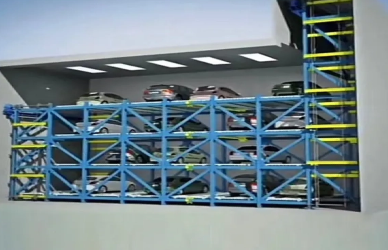
Robotic parking systems (RPS) are an innovative solution designed to optimize parking in high-density urban areas where space is limited. These systems utilize automated technology to park and retrieve vehicles with minimal human intervention. The main advantage of robotic parking systems is their ability to maximize parking density while minimizing the physical space required.
Understanding the time it takes for a robotic parking system to park or retrieve a vehicle is crucial for users considering adopting these systems, particularly in busy urban environments where convenience and time are essential. In this article, we will explore the factors influencing the time it takes for robotic parking systems to operate, the average time it takes for parking and retrieval, and the technological components that can affect this timing.
1.Factors Influencing Time in Robotic Parking Systems
System Design and Type
The time it takes to park or retrieve a vehicle in a robotic parking system largely depends on the design and type of system being used. Robotic parking systems can be broadly categorized into mechanical systems and fully automated systems.
· Mechanical Systems: These systems rely on conveyor belts, lifts, or rotating platforms to move the car to its designated parking space. The mechanical nature of these systems can sometimes lead to longer retrieval times, especially if the car is placed deeper into the stack.
· Fully Automated Systems: These systems use advanced robotics, sensors, and software to automatically move vehicles. They tend to be faster because they are optimized for speed and efficiency through algorithms that prioritize parking and retrieval operations.
System Type |
Average Parking Time |
Average Retrieval Time |
Efficiency Level |
Mechanical System |
2–5 minutes |
3–5 minutes |
Moderate |
Fully Automated System |
1–2 minutes |
1–3 minutes |
High |
Vehicle Position and Parking Density
The position of a vehicle within the robotic parking system plays a significant role in how long it will take to retrieve it. For example, a car parked at the front of the system will be retrieved faster than one parked deep in the stack.
The parking density of the system also impacts retrieval times. In systems with high parking density, vehicles may be packed more closely together, requiring more time for the system to move multiple vehicles to access the one being retrieved.
Additionally, the number of available spaces and the frequency of use can lead to varying retrieval times, especially in busy commercial or public areas.
Table: Average Retrieval Time by Parking Location
Vehicle Position |
Average Retrieval Time |
Remarks |
Front of the System |
1–2 minutes |
Quick retrieval, less vehicle movement. |
Middle of the System |
2–3 minutes |
Moderate retrieval, may need vehicle shifts. |
Deep in the Stack |
3–5 minutes |
Longer retrieval, multiple cars need movement. |
2.Average Time for Parking and Retrieval
Standard Retrieval Time
The typical retrieval time for a robotic parking system is between 1 and 3 minutes. This time can vary depending on the complexity of the system, the position of the vehicle, and the speed of the lift or robotic arm. On average, fully automated systems are faster, with retrieval times generally in the 1–2-minute range.
· For Mechanical Systems: Retrieval times can be longer due to the movement of mechanical parts such as conveyors or lifts.
· For Automated Systems: These systems often have sensors and software that optimize the retrieval process by calculating the most efficient path.
Variations Based on System Complexity
The time it takes to park or retrieve a car can vary based on the complexity of the system's design. Advanced systems with multiple robotic arms or conveyor belts can work more efficiently and may shorten retrieval time, especially in high-density setups. However, older or simpler systems may take longer to park and retrieve cars due to the lack of sophisticated technology.
System Type |
Parking Time |
Retrieval Time |
Complexity Level |
Basic Robotic System |
3–5 minutes |
3–5 minutes |
Low |
Advanced Automated System |
1–2 minutes |
1–3 minutes |
High |
3.Technological Factors Affecting Speed
Software and Control Systems
The software and control systems of a robotic parking system are essential for optimizing the time it takes to park or retrieve a vehicle. The system uses algorithms to determine the fastest route for a vehicle to be parked or retrieved. This can drastically reduce the overall time, particularly in more sophisticated systems.
· AI and Machine Learning: Many modern systems incorporate artificial intelligence (AI) to analyze traffic patterns, vehicle placement, and even predict future parking space usage. These systems are designed to optimize the flow of vehicles, reducing wait times and improving overall efficiency.
Mechanical and Hydraulic Systems
The mechanical and hydraulic systems in robotic parking systems, such as lifts, conveyors, or robotic arms, directly affect the speed of vehicle retrieval.
· Hydraulic Lifts: These lifts can lift and move vehicles quickly, but the speed depends on the hydraulic power and the lift mechanism used.
· Robotic Arms and Conveyors: Automated systems that use robotic arms and conveyors are designed for precision and speed. The speed of these systems depends on their design and the number of vehicles they handle.
System Component |
Impact on Speed |
Remarks |
Hydraulic Lifts |
Moderate |
Speed depends on lift size and design. |
Robotic Arms |
High |
Fast and precise, often automated for speed. |
Conveyor Systems |
Moderate |
Can be slower in older systems. |
4.Comparing Robotic Parking Systems to Traditional Parking
Speed in Comparison to Traditional Parking
When compared to traditional parking garages, robotic parking systems are generally much faster in terms of both parking and retrieval. In conventional parking garages, drivers must manually navigate through aisles, search for an available space, and park the vehicle, which can take anywhere from 5 to 15 minutes during peak times.
In contrast, robotic parking systems reduce the time spent searching for a parking spot, as vehicles are directly placed in available spaces without the need for human intervention. This not only saves time for users but also optimizes space in the parking area.
Efficiency and Convenience
Robotic parking systems provide greater efficiency and convenience compared to traditional parking methods. While traditional parking garages are subject to human error, congestion, and inefficiency, robotic systems consistently deliver faster service with minimal human interaction. The reduced space requirements of robotic parking systems also mean more vehicles can be parked in the same amount of space, further improving efficiency.
Comparison Factor |
Traditional Parking |
Robotic Parking System |
Average Parking Time |
5–15 minutes |
1–3 minutes |
Parking Space Efficiency |
Low |
High |
Human Interaction |
High |
Minimal |
5.Improving Parking and Retrieval Times
Enhancing System Design
One of the best ways to improve the speed of a robotic parking system is to enhance the system design. Streamlining the layout of the parking spaces, improving the lift and robotic arm efficiency, and optimizing the software for faster decision-making can all contribute to faster parking and retrieval times. The more efficient the design, the quicker the system will be able to park and retrieve vehicles.
Software Optimization
Software optimization is another key factor in improving the efficiency of a robotic parking system. By implementing AI-powered algorithms and predictive systems, the parking system can optimize the vehicle flow, reduce idle times, and ensure that retrieval processes are as fast as possible. This technology allows the system to learn from patterns of usage and automatically adjust its operations to enhance speed.
Improvement Area |
Potential Impact |
Remarks |
System Design |
High |
Streamlined systems lead to faster operations. |
AI and Software |
High |
Smart algorithms help optimize retrieval and parking time. |
FAQ (Frequently Asked Questions)
Are robotic parking systems faster than traditional parking garages?
Yes, robotic parking systems typically take 1 to 3 minutes to park or retrieve a car, much faster than the 5–15 minutes spent in traditional parking garages during peak hours. Traditional garages require drivers to navigate aisles, find available spaces, and park manually, whereas robotic systems eliminate these steps, optimizing the entire process for speed and efficiency.
How does the position of the vehicle affect the retrieval time?
The deeper the car is placed in the stack, the longer it will take for the system to retrieve it. Cars positioned at the front of the system can be retrieved much more quickly as fewer vehicles need to be moved. In more densely packed systems, retrieving a vehicle at the back might require the movement of multiple cars, which can extend retrieval time.
What factors impact the speed of a robotic parking system?
The speed of the system is influenced by several factors, including the system type (mechanical vs. fully automated), vehicle position, design complexity, and the efficiency of the mechanical and software components. Systems that incorporate AI or advanced software are often able to optimize routes for faster retrieval, while mechanical systems may be slightly slower due to physical movement limitations.
Can robotic parking systems accommodate larger vehicles like SUVs?
Yes, many robotic parking systems can be customized to accommodate larger vehicles such as SUVs and trucks by adjusting the platform sizes and height restrictions. These systems are designed to ensure that a variety of vehicle types can be parked efficiently, even those with larger dimensions. Custom configurations can also be made based on specific needs, allowing more flexibility for commercial or residential installations.
Conclusion
In summary, the time it takes to park or retrieve a vehicle in a robotic parking system is influenced by several factors, including the design and complexity of the system, the position of the vehicle, and the technology used. On average, robotic parking systems can park or retrieve a car in 1–3 minutes, much faster than traditional parking garages. With advancements in software, AI, and mechanical systems, these times can be further reduced, offering increased efficiency and convenience. As robotic parking technology continues to evolve, it promises to provide even faster, more reliable, and efficient parking solutions for urban areas.