As cities around the world face increasing population densities and limited parking space, finding innovative solutions to parking challenges has become more critical than ever. Smart parking solutions leverage technology to optimize parking spaces, reduce traffic congestion, and improve overall urban mobility. These solutions offer significant improvements over traditional parking methods by using sensors, mobile apps, and automated systems to guide drivers to available parking spots, enhancing both convenience and efficiency. In this article, we’ll explore what smart parking solutions are, their benefits, the types of systems available, challenges they face, and the future potential for smart parking in cities worldwide.
1.What is a Smart Parking Solution?
Definition and Key Features
A smart parking solution refers to a technology-driven system that automates parking processes and enables drivers to find, reserve, and pay for parking through real-time data. These systems typically rely on a combination of sensors, mobile applications, and data analytics to provide users with up-to-date information about parking space availability, often in real-time. Unlike traditional parking systems, where drivers must manually search for an available spot, smart parking systems enhance the user experience by making the parking process faster, easier, and more efficient.
Components of Smart Parking
Smart parking systems typically consist of several key components, including:
· Sensors: These devices are embedded in parking spaces or areas and monitor occupancy, transmitting real-time data to the system.
· Mobile Apps: Drivers use apps to search for available spaces, reserve spots, and make payments.
· Data Analytics and Cloud Computing: Data gathered from sensors and apps are processed and analyzed to help optimize parking space usage and guide drivers to available spaces.
· Payment Systems: Integration of digital payment solutions allows users to pay for parking seamlessly through apps or online platforms.
How It Works
Smart parking systems operate by using sensors to monitor parking space availability. When a car enters or leaves a spot, the sensors detect the change and update the central system, which can then relay the information to users via a mobile app or other interfaces. This allows drivers to locate and navigate to available parking spaces without wasting time circling the area looking for an open spot. Some systems also allow users to reserve a parking space in advance, ensuring they have a spot waiting when they arrive.
2.Benefits of Smart Parking Solutions
Reduced Congestion
One of the most significant advantages of smart parking solutions is their ability to reduce congestion. In traditional parking lots, drivers spend considerable time driving around looking for an open spot, which not only increases frustration but also adds to traffic congestion. Smart parking systems address this issue by providing real-time information on available spaces, which allows drivers to head directly to an open spot. This reduces the amount of time spent searching for parking and ultimately alleviates traffic congestion, especially in high-density urban areas.
Increased Parking Efficiency
With the real-time data provided by sensors and apps, smart parking systems make parking space utilization more efficient. These systems can guide drivers to the closest available spot, ensuring that parking spaces are used to their full potential. For cities with limited parking, this means fewer cars on the road and more effective use of existing infrastructure.
Environmental Impact
The reduction in time spent searching for parking leads to lower fuel consumption and fewer carbon emissions. According to research, drivers in traditional parking systems can waste up to 30% of their driving time searching for a parking spot. By decreasing this search time, smart parking solutions help reduce fuel usage, lower emissions, and contribute to more sustainable urban environments.
Benefit | Description | Impact |
Reduced Congestion | Minimizes the time drivers spend searching for parking. | Reduced traffic congestion and faster travel times. |
Increased Parking Efficiency | Provides real-time parking availability data. | Maximizes the use of available parking spaces. |
Environmental Impact | Reduces the amount of time cars spend idling and searching for parking. | Lower fuel consumption and reduced carbon emissions. |
3.Types of Smart Parking Solutions
Sensor-Based Parking
Sensor-based parking systems use embedded sensors to detect the presence of a vehicle in a parking space. These sensors transmit data to a central system, which updates parking availability in real-time. Drivers can access this data via a mobile app or other interfaces to find available spots. Sensor-based systems are one of the most common smart parking solutions because they are relatively simple to install and can be integrated into existing parking infrastructure.
· Advantages: Quick installation, relatively low cost, and real-time data accuracy.
· Disadvantages: Limited by sensor coverage and potential malfunctions.
Mobile-Based Parking
In mobile-based parking solutions, drivers can use a smartphone app to search for available parking spaces, make reservations, and pay for parking. The app is connected to the parking system’s backend, which provides real-time updates on available spaces. Some mobile-based systems also allow for reservation of spots in advance, ensuring that drivers have guaranteed parking upon arrival.
· Advantages: Easy-to-use, convenient, and offers additional features such as payments and reservations.
· Disadvantages: Requires users to have a smartphone and internet connectivity.
Automated Parking Systems
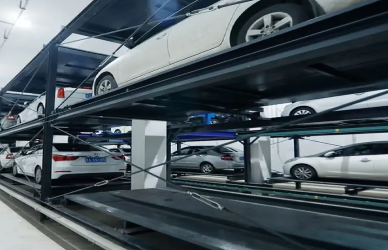
Automated parking systems (APS), also known as robotic parking systems, take parking automation to the next level by completely removing the driver from the parking process. In these systems, vehicles are driven into an entrance area, and the system automatically parks the car in an available space using robotic technology. These systems can park cars more efficiently by utilizing vertical space and minimizing the need for space between parked cars.
· Advantages: Maximizes space utilization, reduces the risk of human error, and offers a fully automated experience.
· Disadvantages: High initial cost and infrastructure requirements.
Type of Smart Parking | Key Features | Pros | Cons |
Sensor-Based Parking | Sensors detect vehicle presence and availability. | Quick installation, cost-effective. | Limited sensor coverage, potential malfunctions. |
Mobile-Based Parking | Parking data and payments accessible via apps. | Convenient, allows reservations and payments. | Relies on smartphones and internet access. |
Automated Parking Systems | Fully automated vehicle storage and retrieval. | Maximizes space, fully automated. | High upfront cost and installation complexity. |
4.Challenges and Limitations of Smart Parking Solutions
Infrastructure Costs
While smart parking solutions offer many benefits, the initial cost of implementation can be significant. The need for sensors, mobile apps, and data analytics infrastructure can drive up costs, particularly in older parking facilities that may require substantial retrofitting. In addition, automated parking systems, which involve advanced robotics, can require high upfront investments in both hardware and software.
Technological Issues
Smart parking systems rely heavily on advanced technologies such as sensors, cloud computing, and mobile apps. As with any technology, there are risks associated with system failures, hardware malfunctions, or software glitches. For example, sensors may malfunction or lose connectivity, which could lead to inaccurate parking data being provided to users.
Adoption and User Education
Despite their benefits, many people may not be familiar with how smart parking systems work or how to use them. This can create barriers to adoption, particularly in cities with older parking infrastructure. Educating the public on how to use smart parking systems, downloading apps, and making digital payments is crucial for successful implementation.
5.The Future of Smart Parking
Integration with Smart Cities
The future of smart parking is closely tied to the development of smart cities. As urban environments become more technologically advanced, smart parking solutions will play a pivotal role in optimizing traffic flow, reducing congestion, and improving overall urban mobility. Smart parking systems will be integrated with other smart city technologies, such as traffic management, public transportation systems, and mobility apps, to create seamless urban experiences.
Innovative Trends in Smart Parking
The next generation of smart parking will likely incorporate cutting-edge technologies such as AI, machine learning, and the Internet of Things (IoT). These technologies will allow parking systems to become even more efficient by predicting parking demand, dynamically adjusting prices based on demand, and optimizing the overall user experience.
Scalability and Global Adoption
As cities across the globe look for ways to improve their infrastructure, the scalability of smart parking solutions becomes increasingly important. These systems can be scaled to fit the needs of small neighborhoods or large metropolitan areas, providing solutions for cities with varying levels of parking challenges. With increasing urbanization and a global shift toward sustainability, smart parking solutions will likely become a standard feature in cities worldwide.
FAQ (Frequently Asked Questions)
How does smart parking reduce traffic congestion?
Smart parking systems reduce congestion by providing real-time data on available parking spots, allowing drivers to head directly to an open space instead of circling around searching for one.
What technology is used in smart parking solutions?
Smart parking systems use sensors, mobile apps, data analytics, and cloud computing to track parking space availability and facilitate user interaction.
Can smart parking systems be integrated with public transportation?
Yes, many smart parking solutions can be integrated with public transportation systems, helping drivers find parking near transit hubs and reducing overall traffic congestion.
Are smart parking systems suitable for all cities?
Smart parking systems are adaptable, but their implementation depends on the city’s infrastructure, budget, and technological readiness. They are most effective in densely populated urban areas.
Conclusion
Smart parking solutions are transforming the way cities approach parking challenges, offering numerous benefits such as reduced congestion, increased parking efficiency, and environmental sustainability. With advancements in sensor technology, mobile apps, and automated systems, smart parking is rapidly becoming an essential part of modern urban infrastructure. While there are challenges to overcome, such as initial costs and public adoption, the future of smart parking is promising, with the potential to reshape urban mobility and integrate seamlessly with smart city initiatives.