As urban areas continue to grow, the demand for efficient parking solutions has skyrocketed due to the limited availability of parking spaces. With increasing populations and limited land, traditional parking methods are no longer sufficient to meet the needs of city dwellers. This has led to the rise of car parking lifts, which maximize vertical space and allow multiple vehicles to be parked in the same area, addressing the issue of overcrowded parking lots.
Understanding the weight capacity of a parking lift is essential for ensuring both safety and functionality. Each car parking lift is designed to support a specific weight, and selecting the right lift based on your vehicle's weight is crucial to avoid overloading, which could cause mechanical failure or safety hazards. Additionally, knowing the weight capacity helps to ensure that the lift is suitable for your parking needs, whether it's for a small residential garage or a large commercial parking facility. Properly matching the lift to your vehicle's weight ensures efficient operation and longevity of the system.
1.What is a Car Parking Lift?
A car parking lift is a mechanical system that moves vehicles vertically, allowing multiple cars to be stacked within the same space. They are particularly useful in urban areas where land is limited, maximizing parking capacity without expanding the parking footprint.
Role of Car Parking Lifts in Maximizing Parking Space
Car parking lifts use vertical space to increase parking capacity, especially in crowded urban areas. By stacking cars on different levels, they make efficient use of limited land, enabling more vehicles to be parked in the same area.
Types of Car Parking Lifts
Two-Post Lifts
A basic, cost-effective option for residential or small commercial spaces, supporting lighter vehicles.
Four-Post Lifts
More stable and durable, ideal for heavier vehicles. Common in commercial and multi-level parking areas.
Scissor Lifts
Compact and efficient, using a crisscrossing arm system to raise vehicles. Perfect for tight spaces.
Rotary Lifts
Rotate vehicles into place, often used in high-rise parking systems for faster access.
In-Ground Lifts
Installed below ground level, offering a space-saving solution without taking up visible surface area.
Function of Car Parking Lifts in Multi-Level Parking Systems
Car parking lifts move vehicles between different levels in multi-level parking structures. They improve space utilization, enhance traffic flow, and increase parking capacity by stacking cars vertically. These lifts are essential for high-density areas, providing a practical solution to urban parking challenges.
2.Factors Influencing Weight Capacity
Several factors determine the weight capacity of a car parking lift, ensuring the system can safely handle the required loads. These factors include material construction, lift type, load distribution, and compliance with safety standards.
Material Construction: Steel vs. Aluminum
The materials used in building a car parking lift significantly impact its weight capacity. Steel is the most common material due to its strength and durability, allowing it to handle heavier loads. Aluminum, while lighter and resistant to corrosion, is generally used in lighter-duty lifts. Steel-based lifts are more robust and can support higher weights compared to aluminum-based models.
Lift Type: Two-post, Four-post, Scissor Lifts, and Others
The design of the lift itself also influences its weight-bearing capacity.
· Two-post lifts are simpler and typically support lighter vehicles, making them ideal for residential use.
· Four-post lifts are stronger and can handle heavier vehicles, often used in commercial or multi-level systems.
· Scissor lifts are compact and efficient for tight spaces, supporting mid-range weight capacities.
Load Distribution and Design Specifications
How the load is distributed across the lift is crucial to its weight capacity. Lifts with even load distribution ensure that the system doesn't strain at certain points. Well-designed lifts with reinforced structures can handle more weight and maintain stability when lifting vehicles.
Compliance with Safety Standards
Safety standards, such as those from ANSI (American National Standards Institute) and EU (European Union), play a crucial role in determining a lift's maximum weight capacity. Compliance ensures that the lift has been tested for safety, structural integrity, and reliability, helping to prevent failures and accidents during use.
3.Typical Weight Capacity
The weight capacity of car parking lifts varies depending on whether the lift is intended for residential or commercial use.
Residential vs. Commercial Lift Weight Limits
· Residential Lifts: Typically, residential car parking lifts are designed to handle lighter vehicles and generally have a weight capacity ranging from 2,500 kg (2.5 tons) to 3,000 kg (3.0 tons). These lifts are commonly used in private garages where parking spaces are limited, and most vehicles are not excessively heavy.
· Commercial Lifts: Commercial car parking lifts are built to support heavier loads and are designed for multi-level parking facilities, office buildings, or commercial complexes. These lifts typically have weight capacities ranging from 3,000 kg (3.0 tons) to 5,000 kg (5.0 tons), depending on the model. They are intended to accommodate larger or more varied vehicle types, including SUVs, trucks, and vans.
Average Weight Capacity: 3,000–3,200 kg (3.0–3.2 tons)
The average weight capacity for most car parking lifts is between 3,000 kg (3.0 tons) and 3,200 kg (3.2 tons). This is the most common range for both residential and commercial lifts, as it covers the weight of standard vehicles, including sedans, small SUVs, and light trucks.
Variations in Weight Capacity Across Different Lift Models
· Different models of car parking lifts can have varying weight capacities based on their design, material construction, and intended use.
o Basic two-post lifts may have lower weight capacities, typically around 2,500 kg (2.5 tons), suitable for compact vehicles.
o Four-post lifts, which provide more stability and durability, may support up to 4,000 kg (4.0 tons), making them ideal for larger vehicles.
o Heavy-duty models designed for industrial or commercial purposes can support up to 5,000 kg (5.0 tons) or more.
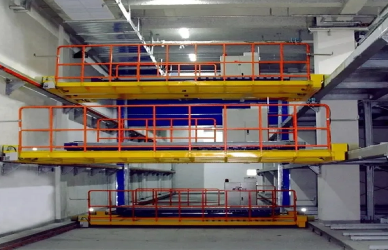
4.How to Choose the Right Lift for Your Vehicle
Choosing the right car parking lift is crucial to ensure safe and efficient use. Below are key factors to consider when selecting a lift that matches your vehicle's specifications.
Matching Vehicle Weight with Lift Capacity
The first and most important factor when choosing a car parking lift is ensuring that the lift can safely support the weight of your vehicle. Each lift has a specified weight capacity, so it’s essential to check your vehicle's weight and match it with the lift’s rated capacity.
· For standard vehicles like sedans or compact cars, a lift with a weight capacity of 2,500 to 3,000 kg will be sufficient.
· For larger vehicles like SUVs, trucks, or vans, you will need a lift that supports at least 3,500 kg or more.
It’s always a good idea to select a lift with a slightly higher weight capacity than required to ensure a safety margin.
Options for Customization to Handle Heavier Vehicles
If your vehicle exceeds the typical weight range of a standard car parking lift, consider looking for customized lifts or heavy-duty models. These lifts are designed to handle larger vehicles and have higher load capacities, often reaching up to 5,000 kg or more.
· Heavy-duty lifts: Built with stronger materials and reinforced structures to accommodate heavy-duty vehicles such as trucks, SUVs, or electric vehicles with larger battery packs.
· Custom lifts: Some manufacturers offer customization options, allowing for specific weight, height, and space requirements to be met.
Considering Additional Factors like Vehicle Height and Size
In addition to the weight, it’s important to consider the dimensions of your vehicle, including its height, length, and width. Some car parking lifts may have space constraints that could limit the size of the vehicles they can accommodate.
· Vehicle Height: Ensure that the lift provides enough clearance for your vehicle, especially if you own a taller car (e.g., an SUV or truck).
· Vehicle Length and Width: Make sure that the lift can fit your vehicle comfortably, especially if you have a larger vehicle that may take up more space than typical sedans.
Choosing a lift with an adjustable platform or one designed for oversized vehicles may be necessary if your car exceeds standard dimensions.
5. Safety Considerations
When selecting and using a car parking lift, safety is crucial. Ensure the lift operates securely by considering key safety features, installation practices, and maintenance routines.
Features such as Overload Protection, Mechanical Locks, and Limit Switches
· Overload Protection: Prevents the lift from exceeding its weight limit. If a vehicle exceeds the capacity, the system stops or alerts to avoid damage or accidents.
· Mechanical Locks: Secure the lift platform in place, especially when the vehicle is parked, preventing accidental shifts and ensuring stability.
· Limit Switches: Automatically stop the lift at a preset position to avoid over-travel and prevent damage to the system or vehicle.
Importance of Professional Installation
Professional installation ensures the lift is set up correctly and meets safety standards. Experts ensure:
· The lift is installed per manufacturer specifications and local codes.
· Proper alignment and calibration, minimizing malfunction risks.
· The structure can safely support the lift and vehicle weight.
Proper installation helps avoid costly repairs and ensures long-term safety.
Routine Maintenance and Inspection for Optimal Performance
Regular maintenance extends the lift's lifespan and ensures safety. Key tasks include:
· Lubricating moving parts to reduce friction.
· Inspecting cables and hydraulic systems for damage.
· Checking safety features like overload protection, mechanical locks, and limit switches.
· Cleaning the lift to prevent debris build-up.
Routine maintenance ensures smooth operation, reduces breakdowns, and keeps safety features functional.
FAQ (Frequently Asked Questions)
What factors affect the weight capacity of a car parking lift?
The type of lift, materials used in construction, and design specifications all influence the lift's weight capacity.
Is the weight capacity of a car parking lift standard across all models?
No, the capacity varies depending on the lift model, whether it's designed for residential or commercial use.
How do I know if my car's weight is suitable for a parking lift?
Compare your vehicle's weight with the lift's maximum capacity and opt for a lift with a higher weight limit if necessary.
Are there heavy-duty lifts available for larger vehicles?
Yes, heavy-duty lifts can support weights of up to 5,000 kg (5 tons) or more, often customized for larger or commercial vehicles.
Conclusion
In conclusion, selecting the right car parking lift involves understanding your vehicle's weight, size, and ensuring the lift can safely support it. Residential lifts typically support lighter vehicles, with a weight capacity of around 3,000 kg, while commercial lifts are designed for heavier vehicles and can support up to 5,000 kg or more. It's important to match your vehicle's weight with the lift's rated capacity, and consider factors like vehicle height and size. Additionally, customization options are available for heavier or larger vehicles. Always prioritize safety by choosing lifts with essential features like overload protection, mechanical locks, and limit switches. Professional installation ensures that the lift is correctly set up, meeting safety standards, and routine maintenance is key to keeping the system running efficiently. By following these guidelines, consumers can ensure a safe, reliable, and long-lasting car parking lift system.