As urban areas continue to grow and available land becomes increasingly scarce, the demand for innovative parking solutions has surged. One such solution is the stackable parking system, which helps address the growing need for more parking spaces in crowded cities. By utilizing vertical space, stackable parking systems allow multiple vehicles to be parked within the same footprint, significantly increasing parking capacity. Understanding the space requirements for these systems is crucial for effective installation. Proper planning ensures that the system operates efficiently while maximizing the available space, making it a valuable option for residential buildings, commercial complexes, and high-density urban areas where parking is limited.
1.What is a Stackable Parking System?
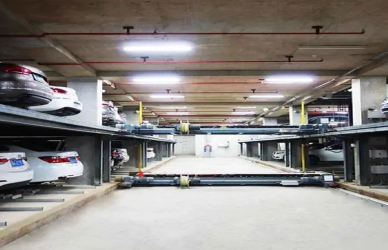
A stackable parking system is a mechanical parking solution that allows multiple vehicles to be parked in a single space by stacking them vertically. This system uses platforms that can be raised or lowered, enabling vehicles to be parked one above the other. Instead of taking up extensive horizontal space, stackable parking systems optimize vertical space, making them ideal for areas with limited ground space.
How Stackable Parking Systems Work
The operation of a stackable parking system typically involves platforms that move up and down using hydraulic or mechanical systems. When a vehicle is parked, the platform holding the car can be raised or lowered to fit into a designated space above or below. These systems can be designed to accommodate anywhere from two to six vehicles stacked vertically, depending on the system's design and the height of the space.
· Automated Stackable Parking: In fully automated systems, sensors and control panels move the platform without human intervention, parking the car automatically.
· Manual Stackable Parking: In manual systems, the driver parks the car on a lower platform, and then the platform is raised or lowered using controls to stack the car on top of others.
Maximizing Parking Space
Stackable parking systems maximize parking space by utilizing the vertical dimension, which is often underused in traditional parking structures. By stacking vehicles, these systems allow more cars to fit within the same ground area, effectively increasing the parking capacity without expanding the building's footprint. This is particularly useful in high-density urban areas, where space is limited and parking demand is high.
2.Space Requirements for Stackable Parking Systems
When considering the installation of a stackable parking system, understanding the space requirements is crucial to ensure the system works efficiently and effectively. These systems are designed to maximize available space by stacking vehicles vertically, but several factors influence the exact amount of space needed for installation.
Typical Space Needed per Parking Space
The typical space required for each parking spot in a stackable system is similar to that of a standard parking space, usually around 2.4 to 2.7 meters (8 to 9 feet) in width and 4.8 to 6 meters (16 to 20 feet) in length. The key difference is that, instead of occupying space horizontally, stackable systems make use of vertical height, enabling multiple vehicles to be stacked in the same area.
For example, a system that stacks two cars vertically may need only one standard parking bay footprint to accommodate the two cars, effectively doubling the parking capacity in the same floor area.
Space-Saving Benefits of Stacking Vehicles Vertically
One of the primary benefits of stackable parking systems is their ability to save space by utilizing the vertical dimension. By stacking vehicles on top of each other, these systems reduce the floor area required for parking, which is especially beneficial in densely populated urban environments where land is limited.
· Increased Capacity: Stackable systems can typically accommodate 2 to 6 vehicles per parking spot, depending on the system’s design and the ceiling height of the space.
· Efficient Use of Available Area: This vertical stacking allows for a more efficient use of land, reducing the need to expand parking structures horizontally, which is often not feasible in crowded cities.
Factors that Influence the Space Requirements
Several factors influence the total space needed for a stackable parking system, including:
· Vehicle Size: Larger vehicles, such as SUVs and trucks, may require slightly more space than standard cars. The lift height and platform size must accommodate the dimensions of the vehicle, which can affect the overall system design and required space.
· Number of Levels: The more levels a system has, the greater the ceiling height required. For example, a two-level system may need a minimum ceiling height of 9–12 feet (2.7–3.6 meters), while a four- or six-level system requires a taller space, usually around 14–18 feet (4.2–5.5 meters) or more.
· Platform and Lift Mechanism: The type of lift (mechanical or hydraulic) and platform design can impact how much space is needed between each level. Some systems use compact designs, while others may have more space between each stacked vehicle for easier access and operation.
· Structural Requirements: The structural integrity of the parking area or building also plays a role in determining space requirements. The floor must be able to support the weight of multiple vehicles, as well as the lift and mechanism itself.
3.Considerations for Installing a Stackable Parking System
When installing a stackable parking system, there are several important considerations to ensure the system functions effectively and safely. These include the ceiling height, floor dimensions, structural requirements, and the site assessment to customize the system according to the space and needs. Proper planning is essential for the installation to be successful and efficient.
Minimum Ceiling Height and Floor Dimensions
· Ceiling Height: The minimum ceiling height required depends on the number of levels in the stackable parking system. For a two-level system, the height should typically be at least 9–12 feet (2.7–3.6 meters). For more levels (three or more), the ceiling height may need to be 14–18 feet (4.2–5.5 meters) or more, depending on the design and vehicle size. Taller vehicles such as SUVs or trucks may require additional clearance.
· Floor Dimensions: The floor space needed for a stackable parking system is typically the size of one standard parking bay per stacked vehicle. The space typically requires 2.4–2.7 meters (8–9 feet) in width and 4.8–6 meters (16–20 feet) in length. These dimensions may vary slightly depending on the vehicle size and the number of levels being stacked.
Structural Requirements for Supporting a Stackable System
The structural integrity of the installation site is crucial for the safe and long-term operation of a stackable parking system. Several key factors to consider include:
· Load-Bearing Capacity: The floor must be able to support the weight of multiple vehicles, as well as the mechanical lift system. Structural reinforcements may be needed, particularly if the parking system will stack more than two levels or accommodate heavier vehicles (e.g., trucks or SUVs).
· Foundation and Floor Strength: The base foundation must be strong enough to withstand the dynamic forces exerted by the lift mechanism and vehicles. Engineers may need to conduct assessments to ensure that the existing floor can support the additional load.
· Lift and Platform System: The lift mechanism (hydraulic, mechanical, or electric) and the platforms themselves must be securely anchored to the floor and ceiling. The mechanical systems need to be properly installed to avoid vibrations or excessive strain on the structure.
Site Assessment and Customization Options
· Site Assessment: Before installing a stackable parking system, a thorough site assessment should be conducted. This includes evaluating the available space, vehicle types to be parked, and any structural limitations. The height and floor dimensions of the space must be confirmed to ensure compatibility with the chosen system.
· Customization Options: Depending on the site and specific needs, stackable parking systems can be customized to fit different vehicles, spaces, and load capacities. Customization may involve:
o Platform Size: Adjusting the size of platforms to accommodate larger vehicles or different configurations.
o Lift Mechanism: Choosing between hydraulic, mechanical, or fully automated systems based on available space and budget.
o Access Features: For systems with multiple levels, automated or manual access options may be customized to allow easier entry and exit for the vehicles.
o Safety Features: Additional safety features, such as enhanced locking systems, anti-collision sensors, or automated fault detection, may be added for extra reliability and security.
4.Benefits of Using Stackable Parking Systems
Stackable parking systems provide numerous benefits, especially in maximizing parking efficiency without expanding the building's footprint. Here's a closer look at their key advantages and ideal installation locations.
Increased Parking Density Without Expanding the Building Footprint
Stackable parking systems significantly increase parking density by utilizing vertical space. This allows multiple vehicles to be parked in the same footprint, effectively doubling or tripling capacity without requiring more land. This system is ideal for urban environments where space is scarce and expanding parking lots horizontally is not feasible.
· Maximizing Space: By stacking vehicles on multiple levels, stackable systems use vertical space to maximize parking capacity in confined areas.
· Efficient Land Use: These systems are particularly useful in high-density urban areas, where land is expensive and limited.
Ideal Locations for Installation
Stackable parking systems are versatile and suitable for various locations:
· Residential Areas: Perfect for apartment complexes, private garages, or neighborhoods with limited parking. These systems offer more parking without needing extra land.
· Commercial Spaces: Ideal for office buildings, malls, or business districts where parking is in high demand. They can optimize underground or multi-story parking structures.
· High-Density Urban Areas: In cities with limited space, stackable systems can be installed in small lots, rooftops, or even underground, maximizing parking in crowded areas.
FAQ (Frequently Asked Questions)
What are the minimum height requirements for a stackable parking system?
Stackable parking systems typically require a minimum ceiling height of 9–12 feet (2.7–3.6 meters), depending on the number of levels.
Can stackable parking systems be installed in small or narrow spaces?
Yes, they are ideal for small or narrow spaces, as they only need a single standard parking space for each stacked vehicle.
What factors affect the space needed for a stackable parking system?
Vehicle size, number of levels, and the specific design of the system all impact the required space.
How does the floor area of a stackable parking system compare to traditional parking?
Stackable systems reduce the floor area needed by utilizing vertical space, allowing for more vehicles to fit in the same horizontal footprint.
Conclusion
In conclusion, stackable parking systems offer significant benefits by maximizing parking capacity without expanding the building footprint. They utilize vertical space, increasing parking density in limited areas, making them ideal for residential, commercial, and high-density urban environments. However, careful consideration of space requirements—such as ceiling height, floor dimensions, and structural integrity—is essential for effective installation. Choosing the right space for installation ensures the system operates efficiently, safely, and provides optimal performance. Proper planning and customization options are key to making the most of stackable parking systems and solving urban parking challenges.